Endometriosis and Pelvic Inflammatory Disease (PID): What You Need to Know
Endometriosis and pelvic inflammatory disease are two distinct conditions that share enough overlapping symptoms to make self-diagnosis difficult and professional evaluation essential. Both can cause chronic pelvic pain, painful intercourse, irregular bleeding, and fertility challenges, yet their causes, diagnostic pathways, and treatments differ significantly.
Endometriosis involves tissue similar to the uterine lining growing outside the uterus, while PID is a bacterial infection of the reproductive organs that can lead to serious complications if left untreated. Neither condition has a single definitive diagnostic test, which is why a thorough review of symptoms and medical history with a qualified specialist matters.
Pelvic floor physical therapy is a meaningful part of care for both conditions, addressing pain, muscle dysfunction, bowel and bladder symptoms, and scar tissue recovery. At Cappuccino Physical Therapy, we work alongside your medical team to help manage symptoms and support your quality of life.
Endometriosis and pelvic inflammatory disease (PID) can present with very similar symptoms, which can make it confusing to know what’s going on in your body.
To add to that, neither condition has a single, straightforward diagnostic test—so it’s common for both to be considered when symptoms arise.
While their symptoms often overlap, their causes, risk factors, diagnosis, and treatment are drastically different. This is why it’s essential to review your symptoms and medical history with a trusted medical provider.
Both conditions require evaluation and diagnosis by a qualified specialist to ensure appropriate care.
Shared Symptoms
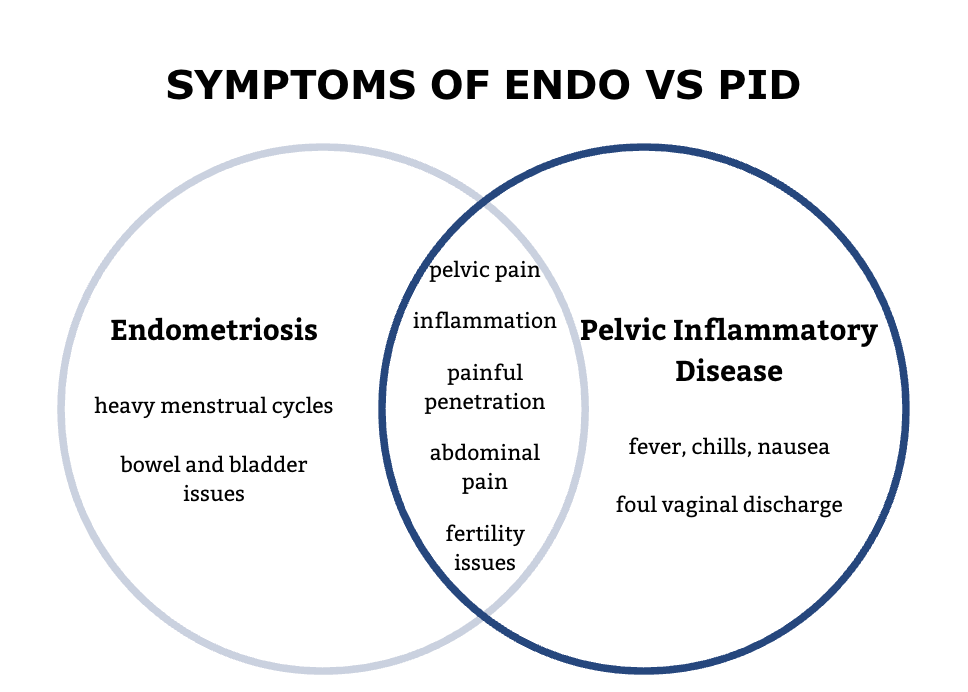
Endometriosis and PID can both present with:
Chronic pelvic pain
Lower abdominal pain
Pain with sex or penetration
Irregular bleeding
Fertility challenges
Key Differences in Symptoms
Endometriosis may also include:
Heavy or painful periods
Painful bowel movements or urination
Bowel and bladder dysfunction
Possible symptoms of PID include:
Fever and chills
Nausea
Abnormal vaginal discharge
What Are They?
Endometriosis
A condition where tissue similar to the uterine lining grows outside of the uterus. These lesions have been found on the ovaries, fallopian tubes, bladder, bowels, and in some cases, even higher in the abdomen.
Pelvic Inflammatory Disease (PID)
PID is an infection of the reproductive organs that leads to inflammation and pain. If left untreated, it can increase the risk of complications, including infertility.
Causes
PID
PID occurs when bacteria travel from the vagina or cervix up into the uterus and fallopian tubes. This can be associated with:
Untreated sexually transmitted infections (STIs, specifically gonorrhea and chlamydia)
Douching (which can push bacteria upward)
Certain bacteria like E. coli
A short-term risk period after IUD insertion
Sexually active women under 25 are at higher risk.
Endometriosis
The exact cause of endometriosis is still unknown, and it can affect individuals across a wide range of ages.
Diagnosis
Neither condition has a single definitive test, so diagnosis typically involves a combination of history, physical exam, and medical testing.
PID is often diagnosed through:
Pelvic exam
Lab testing (including STI screening)
Imaging
Endometriosis is often suspected based on symptoms and history.
Imaging (ultrasound or MRI) may sometimes detect lesions
Definitive diagnosis typically requires laparoscopy, a minimally invasive surgical procedure to visualize and confirm lesions
Treatment
PID
Treated with antibiotics to clear the infection
Symptoms like pain or pelvic floor dysfunction may persist after treatment
Endometriosis
Managed with hormonal therapy and symptom-based care, often times birth control pills are suggested
Surgical excision is often the most effective treatment for removing lesions
Where Pelvic Floor Physical Therapy Fits In
Women with PID and/or endometriosis are often frustrated, in pain, and looking for answers. Pelvic floor physical therapy plays an important role in managing symptoms for both conditions.
PFPT can help with:
Pelvic pain
Muscle tension and dysfunction
Bowel and bladder symptoms
Pain with sex
Scar tissue healing (especially post-surgery)
For PID, PFPT can be especially helpful in addressing lingering symptoms after the infection has cleared.
For endometriosis, it can be an essential part of care—both before and after surgery, or as part of ongoing symptom management.
Where to find treatment for endometriosis and pelvic inflammatory disease in thousand oaks
If you’re experiencing pelvic pain or other concerning symptoms, you deserve answers—not to be dismissed or told it’s “just part of being a woman.”
Pelvic floor PT is a great place to start. We’ll assess your pelvic support, discuss your goals, and create a plan to help you heal and move confidently again. We'd love to help you at Cappuccino Physical Therapy. We proudly serve the women of Conejo Valley who are dealing with endometriosis and PID symptoms.
Contact us to get started today. Have questions before you begin? Submit a contact form or give us a call and we'll be in touch.